Key Takeaways:
- Relapse is a treatment-matching problem, not a personal failure. Research from the National Institute on Drug Abuse shows relapse rates for substance use disorders (40–60%) are comparable to other chronic conditions like hypertension—reflecting the complexity of addiction, not a person’s level of effort or commitment.
- Untreated co-occurring mental health conditions are among the most common drivers of repeated relapse. When depression, anxiety, PTSD, or other conditions go unaddressed, treating only the substance use leaves the underlying cause intact. Integrated dual diagnosis treatment is essential for many people who have relapsed after previous attempts.
- The wrong level of care—or an abrupt transition out of structured treatment—significantly increases relapse risk. A program that is too short or too low-intensity for a person’s clinical complexity is a structural mismatch. Gradual step-down through a full continuum of care (residential → PHP → IOP → OP) provides the scaffolding recovery needs.
- Effective aftercare planning and environmental support are not optional extras—they are clinical necessities. The 30–90 days following discharge are the highest-risk period for relapse. Sober living, case management, peer support, and a concrete transition plan are key factors that distinguish programs with higher long-term outcomes.
Question:
Why do people keep relapsing after going to rehab?
Answer:
Relapse after rehab is more common than most people realize—and far less of a personal failure than it’s often perceived to be. According to NIDA, relapse rates for substance use disorders range from 40 to 60 percent, on par with other chronic medical conditions. This reflects the complexity of addiction, not the character of the person experiencing it.
The five most common reasons people relapse after treatment include: untreated co-occurring mental health conditions, an insufficient level of care, poor aftercare and transition planning, a high-risk home environment, and unresolved trauma that was never directly addressed. These are clinical gaps—not evidence that someone is beyond help.
Understanding what was missing in previous treatment helps reframe relapse as useful information rather than proof that recovery is impossible. Royal Life Centers at Puget Sound offers individualized treatment designed to address exactly these gaps, with a full continuum of care, dual diagnosis treatment, and 24/7 admissions support at 888-308-1985.
If you’ve been to treatment before and it didn’t stick, this post is for you.
Not to push you toward anything. Not to tell you that you just need to try harder, want it more, or hit a deeper bottom. Those ideas cause harm, and they’re not accurate. What they do is leave people feeling like the problem is them—when, most of the time, the problem was the treatment plan.
Relapse is common. According to the National Institute on Drug Abuse (NIDA), relapse rates for substance use disorders range from 40 to 60 percent—comparable to relapse rates for other chronic conditions like hypertension and asthma. That’s not a failure statistic. That’s a clinical reality that points to how complex addiction actually is, and how often treatment needs to be adjusted before it works.
The question worth asking isn’t “Why can’t I stay sober?” It’s “What was missing from my treatment last time?”
That shift in framing changes everything. Because if relapse is a treatment-matching problem—not a character flaw—then the right next step isn’t giving up. It’s figuring out what needs to be different. That’s exactly what this post will help you do.
We’ll walk through the five most common reasons why people relapse after rehab, explain what treatment matching actually means, offer a checklist to help you identify what was missing before, and share how Royal Life Centers at Puget Sound approaches treatment differently for people who’ve tried before.
Why Do People Relapse After Rehab? The Real Answer
Treatment works. The evidence is clear on that. But not every treatment works for every person—and when there’s a mismatch between a person’s needs and the care they receive, relapse becomes far more likely.
This is sometimes called the “treatment-matching problem.” The idea is straightforward: addiction is not a single condition with a single solution. It exists on a spectrum, involves physical dependence, psychological patterns, environmental factors, and often underlying mental health conditions. A 30-day program that helps one person profoundly may leave another person completely unprepared for the challenges ahead.
When relapse happens, it usually signals that something specific was missing. Here are the five reasons that come up most often.
Reason 1: Untreated Mental Health and Relapse
This is one of the most underrecognized contributors to repeated relapse—and one of the most treatable once identified.
Research consistently shows that a significant portion of people with substance use disorders also have a co-occurring mental health condition—depression, anxiety, PTSD, ADHD, bipolar disorder, or others. According to SAMHSA’s 2022 National Survey on Drug Use and Health, approximately 21.5 million adults in the U.S. had co-occurring mental health and substance use disorders.
When a person uses substances to cope with untreated mental health symptoms, treating only the substance use—without addressing the underlying condition—leaves the original pain in place. Recovery becomes much harder to maintain when the root of the problem hasn’t been touched.
If previous treatment didn’t include a thorough mental health assessment, dual diagnosis treatment, or ongoing psychiatric support, that gap may explain a great deal. Untreated mental health and relapse are closely linked, and no amount of determination fills that clinical gap.
Reason 2: Was the Level of Care Right for Your Needs?
Not all treatment programs are the same. There is a spectrum of care that ranges from outpatient programs (a few hours per week) to intensive outpatient, partial hospitalization, and residential inpatient—where a person lives at the facility and receives structured support around the clock.
When someone with a high-acuity addiction enters a low-intensity program, the mismatch often isn’t apparent at first. Progress may happen in the sessions themselves, but the structure, support, and separation from triggers that the person needed simply isn’t there.
Conversely, stepping down from residential care too quickly—before the skills and supports are in place—is another common gap. Residential treatment creates a controlled environment that makes sobriety more manageable. The real test begins when a person returns to everyday life, and the transition needs to be gradual and supported.
If you look back and feel that the program felt too short, too light, or too surface-level given what you were dealing with, that’s worth paying attention to. Royal Life Centers at Puget Sound’s treatment programs span a full continuum—from medical detox and residential inpatient through partial hospitalization, intensive outpatient, and outpatient care—so that the level of care can be matched to the individual, not the other way around.
Reason 3: Insufficient Aftercare and Transition Planning
Completing a residential program is a significant achievement. But the period immediately following discharge is also one of the most vulnerable. Research from the Journal of Substance Abuse Treatment identifies the first 30 to 90 days after treatment as the highest-risk window for relapse.
This is where aftercare planning becomes critical. A solid transition plan typically includes a step-down to a lower level of care, connections to outpatient support, a sober living environment if needed, peer support networks, continued therapy, and case management for any practical life challenges—housing, employment, legal issues—that create relapse pressure.
When someone leaves treatment without those scaffolds in place, they’re essentially walking back into the same world they left without the same level of daily support. It’s not a willpower issue. It’s a structural one.
Royal Life Centers at Puget Sound includes dedicated case managers in their treatment model—professionals who help guests prepare for what comes next, not just survive what’s happening now.
Reason 4: The Environment You Returned To
One of the hardest realities of addiction recovery is that progress made in a protected environment doesn’t automatically transfer to a chaotic or triggering one. If treatment ends and a person returns to a home where substances are accessible, relationships are unstable, or old social networks are still using, the risk of relapse rises sharply regardless of how much work was done in treatment.
This isn’t about blaming anyone’s circumstances. Environmental factors are clinical factors. A comprehensive treatment plan takes them seriously—through housing support, sober living options, family therapy, and community integration.
If previous treatment didn’t acknowledge or address the environment you were returning to, that was a gap in the treatment plan—not a gap in your commitment.
Reason 5: Repeated Relapse Causes — When the Root Was Never Addressed
For some people, substance use is tightly wound around a specific trauma, loss, chronic pain, or life circumstance that was never fully addressed in treatment. Group therapy and psychoeducation are valuable. But if a person’s treatment didn’t include individual therapy focused on their specific history, the work may have stayed at the surface level.
Repeated relapse causes often trace back to this: the emotional wound that made substances feel necessary never actually healed. The coping mechanism changed, but the reason it was needed didn’t.
Therapies like EMDR (Eye Movement Desensitization and Reprocessing), Cognitive Behavioral Therapy (CBT), and trauma-focused approaches are specifically designed to address these deeper layers. They’re not luxury additions to a treatment plan—they’re often the most important part. Royal Life Centers at Puget Sound offers a full spectrum of evidence-based drug addiction therapies, including EMDR, CBT, motivational interviewing, and dual diagnosis treatment, delivered by doctoral and master’s level staff.
What Does “Treatment Matching” Actually Mean?
Treatment matching is the clinical process of aligning what a person receives in treatment with what they actually need—based on the severity and nature of their substance use, any co-occurring conditions, their living environment, their history with treatment, and their personal goals.
A person with a severe opioid use disorder and untreated PTSD has very different clinical needs from someone using alcohol to manage social anxiety. The same 30-day program will produce very different results for each of them.
When treatment matching is done well, it considers:
- Severity of use and whether medical detox is needed
- Co-occurring mental health conditions and whether integrated dual diagnosis treatment is available
- Trauma history and the therapies most effective for processing it
- Social and environmental risks and what supports are needed for a safe transition
- Previous treatment history and what has and hasn’t worked before
- Level of care that matches the complexity of the person’s needs
This is why a thorough admissions and pre-assessment process matters so much. It’s not just paperwork—it’s the foundation on which an effective, individualized treatment plan is built.
Reach Out For Help With Addiction
Are you or a loved one struggling with addiction?
Royal Life Centers at Puget Sound is here to help you recover. Because we care.
What Was Missing Last Time? A Checklist for Reflection
Before pursuing treatment again, it can help to reflect honestly on what previous experiences were missing. This isn’t about judgment—it’s about information.
Ask yourself:
- Was there a thorough mental health assessment? If a co-occurring condition was never identified or treated, that may have been a significant gap.
- Was the level of care intensive enough? Did the program match the severity of your addiction, or did it feel like it was designed for someone with less complex needs?
- Was there a real aftercare plan? Did you leave treatment with a specific step-down program, support network, and plan for practical life challenges?
- Was your home environment addressed? Did anyone talk with you about where you were returning to, and what risks that might carry?
- Was individual therapy part of your treatment? Was there space to work through trauma, grief, or other underlying emotional pain—not just substance use patterns?
- Were co-occurring mental health conditions treated simultaneously? Or was the substance use treated in isolation?
If several of these questions reveal gaps, that’s useful. It means there are specific things to look for—and ask about—when evaluating a program this time around. You can explore what Royal Life Centers at Puget Sound treats to understand the breadth of conditions addressed in their programs.
How Royal Life Centers at Puget Sound Does It Differently
Royal Life Centers at Puget Sound is an addiction treatment center located in Sumner, Washington—part of a network of eight top-rated rehab facilities across the U.S. For people who have been to treatment before and are looking for something more comprehensive, several things distinguish this program.
Individualized treatment from the start. Every guest works with their therapist to develop a personalized treatment plan—called an Individualized Service Plan (ISP)—built around their specific goals, history, and needs. Pre-programmed, one-size-fits-all treatment plans are not used.
Integrated dual diagnosis care. Royal Life Centers at Puget Sound treats co-occurring mental health conditions alongside addiction—not sequentially. This means if untreated mental health was a factor in previous relapses, it’s addressed directly, as part of the same treatment process.
A full continuum of care. Treatment begins with medical detox and residential inpatient at the Sumner facility, then transitions into partial hospitalization, intensive outpatient, and outpatient programs. This gradual step-down is designed specifically to reduce the transition risk that contributes to relapse.
Dedicated case management. Every guest is assigned a case manager who helps address practical challenges outside of treatment—housing, employment, legal matters, and family relationships—because these factors directly affect long-term recovery outcomes.
Specialty certifications and clinical depth. The clinical team includes doctoral and master’s level staff with specialty certifications in EMDR, Accelerated Resolution Therapy (ART), and Wellbriety—ensuring that treatment can address trauma, cultural identity, and complex co-occurring conditions with depth and precision.
For those seeking addiction treatment near Tacoma, WA, Royal Life Centers at Puget Sound offers accessible, high-quality care in the Pacific Northwest, with a personalized admissions process available 24 hours a day, seven days a week.
A Note on Insurance: Aetna Rehab Coverage and Access to Care
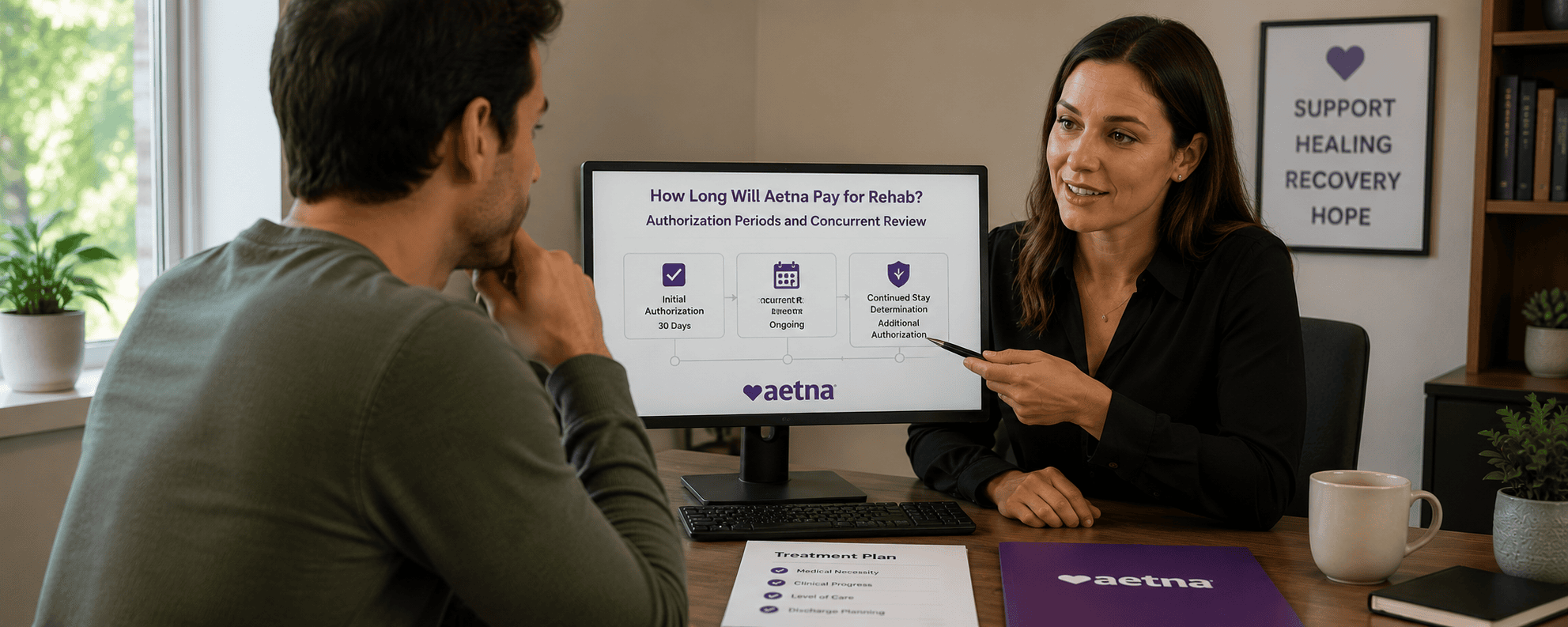
One of the most common reasons people delay re-entering treatment is concern about cost. If you have Aetna insurance, it’s worth knowing that Aetna rehab coverage often includes a range of addiction treatment services—including detox, residential, and outpatient care.
Royal Life Centers at Puget Sound is in-network with several major insurance providers in Washington State. For those specifically looking into Aetna addiction treatment coverage, the facility’s team can walk you through exactly what your plan covers and what out-of-pocket costs, if any, to expect.
The easiest way to find out what you’re covered for is to verify your insurance directly—it’s a confidential process that takes only a few minutes. For more detail on how Aetna coverage works specifically for rehab in Washington State, Royal Life Centers has published a detailed guide to Aetna rehab coverage in Washington, including costs, levels of care, and how to confirm in-network status.
If you’re searching for rehab centers that accept Aetna in Washington State, Royal Life Centers also provides guidance on how to confirm a facility is truly in-network—a step that can prevent unexpected billing surprises and make the path to care far clearer.
Rehab in Washington State doesn’t have to mean navigating a confusing system alone. The admissions team at rehab in Sumner is specifically structured to help with this step. For anyone who has delayed treatment because of insurance uncertainty, this is a solvable problem.
If Something Was Missing Last Time, Let’s Find It
Relapse doesn’t mean treatment doesn’t work for you. It means something specific wasn’t right about the treatment you received—and that’s something that can be identified and addressed.
The people who find lasting recovery after multiple attempts aren’t different from you. They found a program that actually matched their needs. That’s the goal this time.
If you’re ready to take a closer look at what was missing before—and explore what a more tailored approach could look like—Royal Life Centers at Puget Sound offers a free, confidential assessment to help you figure that out.
Call 888-308-1985. The line is open 24 hours a day, seven days a week. No pressure, no judgment—just a conversation about what’s happened before and what might work better.
Frequently Asked Questions
Why do people keep relapsing after multiple treatment attempts?
Repeated relapse is most often a sign of ongoing treatment-matching issues rather than a lack of motivation. The most common contributing factors include untreated co-occurring mental health conditions, insufficient intensity of care, poor aftercare planning, a high-risk home environment, and unresolved trauma that was never directly addressed in therapy. Each relapse carries information about what was missing—and adjusting the treatment approach accordingly improves outcomes significantly.
Does relapse mean treatment has failed?
No. According to the National Institute on Drug Abuse (NIDA), relapse rates for substance use disorders (40–60%) are comparable to those for other chronic medical conditions like hypertension. Relapse is a recognized part of the recovery process for many people, not evidence that treatment cannot work. It typically signals that the treatment plan needs to be reassessed and adjusted—not abandoned.
What is dual diagnosis treatment, and why does it matter for relapse prevention?
Dual diagnosis treatment addresses both substance use disorder and a co-occurring mental health condition—such as depression, anxiety, PTSD, or ADHD—simultaneously. When mental health conditions go untreated, they continue to drive the patterns and emotional pain that substance use was originally managing. Treating addiction without addressing the underlying mental health condition leaves the root cause in place, significantly increasing relapse risk.
What should I look for in a treatment program after a previous relapse?
After a relapse, it’s worth specifically asking about: comprehensive mental health assessment and integrated dual diagnosis treatment, a full continuum of care with graduated step-down options, individual trauma-focused therapy, dedicated case management for real-world life challenges, and a robust aftercare plan. The more thoroughly a program addresses these elements, the more closely it is likely to match your actual clinical needs.
Does Aetna cover rehab in Washington State?
Aetna addiction treatment coverage typically includes a range of substance use disorder treatment services, including detox, residential, and outpatient programs. Coverage levels vary by plan. Royal Life Centers at Puget Sound is in-network with select major insurance providers in Washington State. You can verify your Aetna benefits directly through the admissions team, or review the detailed guide to Aetna rehab coverage in Washington for more information.
Where is Royal Life Centers at Puget Sound located?
Royal Life Centers at Puget Sound is located in Sumner, Washington, making it accessible for those seeking addiction treatment near Tacoma, WA, and throughout the greater Pacific Northwest. The facility offers medical detox and residential inpatient treatment in Sumner, with outpatient and aftercare programs available in Lacey, WA. The admissions team is available 24/7 at 888-308-1985.