Key Takeaways:
- Mixing kratom and alcohol can make their effects significantly harder to predict, since kratom’s effects range from stimulant-like to sedating depending on dose and product, while alcohol is a consistent central nervous system depressant.
- Research specifically studying kratom and alcohol together in controlled human trials is limited, meaning there’s no scientifically established “safe” amount for combining the two.
- CDC poison-center data show that 79% of 233 kratom-associated deaths reported between 2015–2025 involved multiple substances, with ethanol present in 19% of fatalities—highlighting how common polysubstance use is among serious kratom-related outcomes.
- Warning signs of an overdose (inability to wake up, abnormal breathing, bluish skin, vomiting while unconscious) require immediate emergency care; this combination should never be assumed to simply “wear off” safely.
Question:
Is it dangerous to mix kratom and alcohol?
Answer:
Mixing kratom and alcohol is a form of polysubstance use that can make the effects of both substances significantly harder to predict. Alcohol is a well-documented central nervous system depressant that impairs coordination, judgment, and, at high levels, breathing and heart rate. Kratom’s effects vary by dose, product type, and individual tolerance, ranging from stimulation to sedation. Combined, the two can heighten sedation, cause nausea and vomiting, and impair judgment in ways that increase the risk of accidents, falls, and overdose. CDC data show that the majority of reported kratom-associated deaths between 2015 and 2025 involved multiple substances, underscoring the added danger of polysubstance use. While specific research on kratom and alcohol remains limited, the broader evidence on mixing depressants and other drugs is clear enough to warrant real caution and, when needed, professional support.
If you or someone you love has been mixing kratom and alcohol, you’re not alone in wondering how serious this combination really is. Research specifically examining kratom and alcohol together in controlled human studies remains limited, which makes it difficult to point to an exact “safe” amount of either substance when combined. What we do know is grounded in how each substance behaves on its own, and how combining psychoactive substances tends to amplify risk.
Alcohol is well understood as a depressant that slows reaction time, impairs judgment, and can interfere with breathing and heart rate at high enough levels. Kratom, derived from the Mitragyna speciosa plant, interacts with opioid receptors and can produce effects ranging from stimulation to sedation depending on the dose, the product, and the individual. When these two substances meet in the body, the results can be harder to predict than either substance would produce alone.
This article walks through what happens physically and mentally when kratom and alcohol are mixed, what the latest poison-center data show about kratom-related deaths and polysubstance use, and the warning signs that indicate it’s time to reach out for help.
What Is Kratom and How Does It Affect the Body?
Kratom comes from the leaves of Mitragyna speciosa, a tree native to Southeast Asia. Its two primary alkaloids—mitragynine and 7-hydroxymitragynine (7-OH)—interact with opioid receptors in the brain, though kratom isn’t simply classified as a conventional opioid. This is a common point of confusion: many people ask, “is kratom an opioid?” The honest answer is more nuanced. Kratom’s alkaloids act on some of the same receptors as opioids, but the plant’s overall pharmacology and effects can differ meaningfully from drugs like oxycodone or heroin.
Kratom’s effects vary widely based on several factors:
- Amount consumed — lower doses tend to produce more stimulant-like effects, while higher doses lean toward sedation.
- Frequency of use — regular use can build tolerance, changing how a person responds to the same dose over time.
- Individual physiology and tolerance — body weight, metabolism, and prior substance use all play a role.
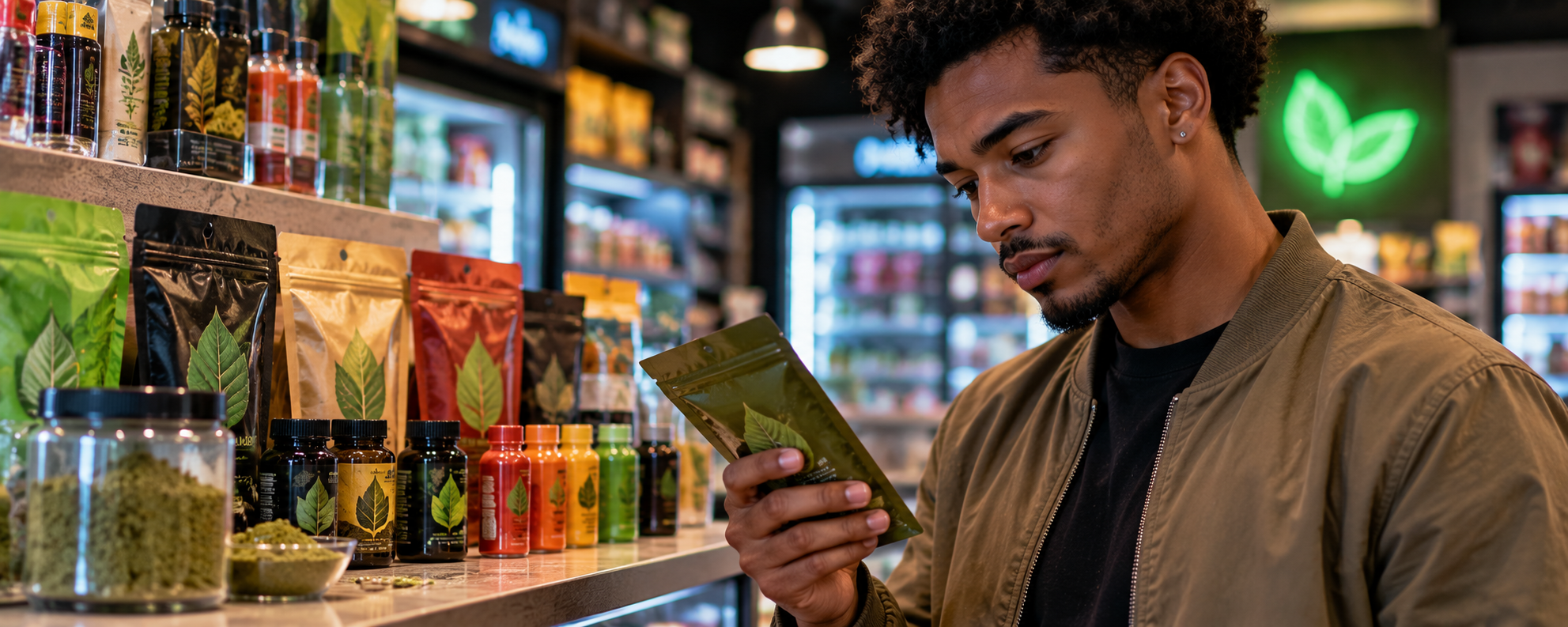
- Product type — traditional kratom leaf differs significantly from concentrated extracts, kratom pills, kratom shots, and 7OH kratom products, which tend to be far more potent.
- Other substances consumed — combining kratom with alcohol, medications, or other drugs changes the overall effect.
Kratom vapes and kratom beverages have also entered the market in recent years, adding more variability. Because potency varies so dramatically between a cup of traditional kratom tea and a concentrated 7OH product, it’s difficult to make blanket statements about “kratom” as a single, consistent substance. Potential effects include stimulation, relaxation, sedation, dizziness, nausea, and changes in alertness—any of which can shift depending on the product in hand.
What Does Alcohol Do to Your Brain and Body?
Alcohol is a central nervous system depressant. Even in small amounts, it slows down brain function and affects nearly every system in the body. According to the National Institute on Alcohol Abuse and Alcoholism (NIAAA), alcohol can cause:
- Slower reaction time
- Reduced coordination
- Impaired judgment
- Lowered inhibitions
- Changes in mood
- Drowsiness
- Memory impairment or blackouts at higher levels
At sufficiently high concentrations, alcohol can interfere with the brain areas responsible for breathing, heart rate, and temperature regulation (NIAAA). This is part of why alcohol poisoning is a genuine medical emergency, not something to “sleep off.”
What Happens When You Mix Kratom and Alcohol?
The Combination Can Make Effects Harder to Predict
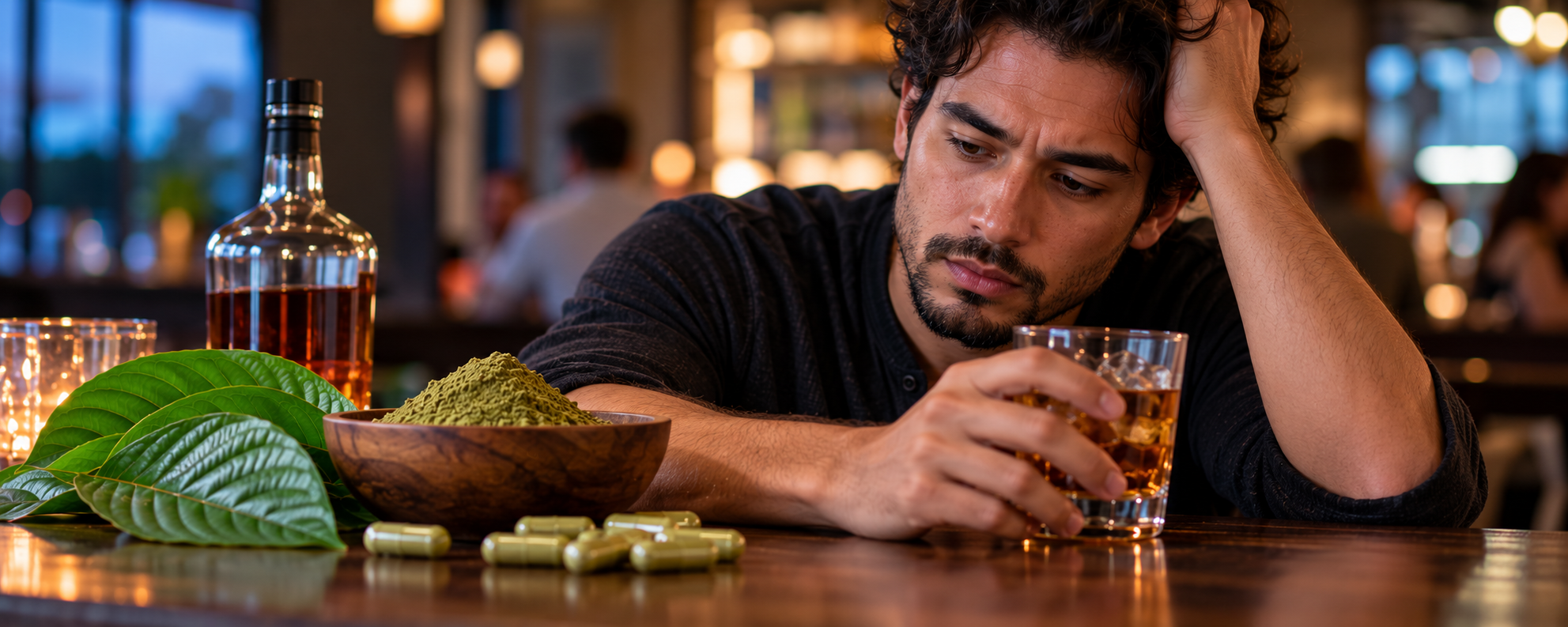
One of the biggest misconceptions about mixing kratom and alcohol is the idea that the two might “balance each other out.” Kratom’s effects aren’t purely stimulant or purely depressant—they exist on a spectrum that shifts with dose and product. Alcohol adds another psychoactive substance to that equation, and the resulting effects may depend heavily on dose, product potency, individual tolerance, timing, and any other drugs or medications involved. One drug shouldn’t be expected to cancel out another; in practice, kratom and alcohol interaction tends to compound unpredictability rather than resolve it.
Increased Sedation and Drowsiness
Under certain circumstances, both kratom and alcohol can contribute to sedation. When combined, this may lead to excessive drowsiness, dizziness, impaired coordination, and difficulty staying alert. These effects carry real consequences beyond feeling groggy—they’re closely connected to falls, accidents, unsafe driving, and other preventable injuries.
Nausea, Vomiting, and Dehydration
Both kratom and alcohol can cause gastrointestinal symptoms, including nausea and vomiting. This becomes especially concerning if someone is extremely intoxicated or loses consciousness, since vomiting in that state carries a serious risk of choking or aspiration.
What About Breathing?
It’s important not to overstate the comparison here: mixing kratom and alcohol shouldn’t be assumed to cause respiratory depression to the same degree as combining alcohol with fentanyl or other conventional opioids—the evidence isn’t strong enough to support that equivalence. That said, kratom’s activity at opioid receptors, paired with alcohol’s depressant effects on the central nervous system, is a legitimate concern. Severe sedation, an inability to wake someone up, or abnormal breathing patterns should always be treated as a medical emergency.
How Does Mixing Kratom and Alcohol Affect Your Mental State?
Impaired Judgment and Decision-Making
Alcohol reduces judgment and impulse control (NIAAA), and kratom may further alter alertness, perception, mood, or cognition. Together, someone may significantly underestimate how impaired they actually are. This kind of impaired judgment can lead to risky decisions—driving, taking additional doses, mixing in more substances, falling, or getting into arguments.
Anxiety, Agitation, and Mood Changes
Not everyone reacts the same way to drinking on kratom. Some people report anxiety, irritability, agitation, or confusion, while others describe a fleeting sense of relaxation that gives way to negative mood effects later. There isn’t a single universal emotional response, which is part of what makes this combination so unpredictable from person to person.
Alcohol Can Affect Depression and Impulsivity
This connection deserves particular care for anyone already managing depression or anxiety. NIAAA notes that alcohol can worsen depression over time and promote impulsivity. This doesn’t mean that mixing kratom and alcohol will necessarily trigger a psychiatric crisis, but the combination of altered judgment and emotional distress is a genuinely concerning pairing worth taking seriously.
Can You Overdose on Kratom and Alcohol?
Overdose becomes more possible whenever multiple psychoactive substances are involved, though there isn’t a specific, scientifically established lethal dose for kratom combined with alcohol. Alcohol on its own can cause fatal poisoning. Polysubstance use tends to increase the unpredictability and severity of an overdose, and other substances—particularly opioids and benzodiazepines—can increase the danger further when alcohol is part of the mix (NIAAA).
What Do Kratom Poisoning Data Tell Us?
According to CDC data, among 233 kratom-associated deaths reported to U.S. poison centers between 2015 and 2025, 184 (79%) involved multiple substances. Ethanol was reported in 19% of these fatalities.
It’s worth being precise about what this does and doesn’t mean. This statistic doesn’t indicate that alcohol caused 19% of kratom deaths, and poison-center reports can’t establish individual risk for any one person combining kratom and alcohol. What the data do show is that multiple-substance exposure was common among the most serious reported kratom outcomes—and hospitalization and serious-outcome percentages were consistently higher for multiple-substance kratom exposures than for single-substance exposures during this period.
Reach Out For Help With Addiction
Are you or a loved one struggling with addiction?
Royal Life Centers at Puget Sound is here to help you recover. Because we care.
What Is Polysubstance Use?
The CDC defines polysubstance use as using two or more drugs together or within a short period, whether intentionally or unintentionally. Alcohol counts as a drug in this context, which means deliberately combining alcohol and kratom qualifies as a form of polysubstance abuse—even if neither substance is illegal or requires a prescription.
Why Is Polysubstance Use More Dangerous?
Drug interactions can be genuinely unpredictable. Effects may become stronger than expected, or one substance may mask the perceived effects of another—which can encourage someone to drink more or take another dose of kratom because they don’t realize how impaired they already are. Potential consequences include overdose, loss of consciousness, accidents and falls, impaired driving, risky decision-making, organ damage, and the development or worsening of substance use disorders. The CDC reported that nearly half of U.S. drug overdose deaths in 2022 involved multiple drugs.
What If Kratom and Alcohol Are Mixed With Other Drugs?
Kratom + Alcohol + Opioids
Adding fentanyl, heroin, oxycodone, or another opioid into the mix introduces additional danger. Alcohol and opioids can both suppress vital functions such as breathing (NIAAA), and layering kratom on top only adds more uncertainty.
Kratom + Alcohol + Benzodiazepines
Medications like Xanax, Klonopin, and Valium already create a dangerous depressant combination when paired with alcohol. Adding kratom to that mix makes the overall effects even less predictable.
Kratom + Alcohol + Stimulants
Combining kratom and alcohol with cocaine, methamphetamine, or prescription stimulants doesn’t create a neutral balance between “uppers and downers.” The CDC warns that mixing stimulants and depressants can mask each other’s effects, potentially leading someone to underestimate their intoxication and increasing overdose risk.
What Are the Warning Signs of an Alcohol or Polysubstance Overdose?
If you notice any of the following signs, call 911 immediately:
- Cannot be awakened
- Severe confusion
- Vomiting while unconscious or barely conscious
- Seizure
- Slow, irregular, or difficult breathing
- Pale, blue, gray, or clammy skin
- Loss of coordination followed by unconsciousness
- Very slow heart rate
Don’t assume someone can simply sleep off these symptoms. NIAAA specifically warns that a person unconscious from alcohol overdose can choke on vomit and die from lack of oxygen.
Is It Safe to Drink After the Effects of Kratom Wear Off?
There’s no universal waiting period that guarantees safety, and it’s worth being cautious about advice that suggests otherwise. Kratom products vary substantially in potency and composition—a cup of kratom tea and a concentrated 7OH product don’t clear the body at the same rate. Individual metabolism and frequency of use also differ from person to person. Just because the subjective effects of kratom have worn off doesn’t mean the substance is fully out of your system. Anyone asking “can I drink on kratom” or wondering when it’s safe to combine the two should understand that there simply isn’t a scientifically validated answer.
Signs Mixing Kratom and Alcohol May Be Part of a Larger Problem
It can be difficult to recognize when a habit has crossed into something more serious. Some signs worth paying attention to include:
- Regularly needing both substances to relax or socialize
- Using kratom to offset alcohol’s effects, or vice versa
- Taking increasing amounts of either substance
- Switching to stronger kratom extracts or 7OH products
- Drinking or using kratom despite negative consequences
- Blacking out or being unable to remember periods of use
- Experiencing cravings
- Feeling withdrawal symptoms, including kratom and alcohol withdrawal
- Trying unsuccessfully to reduce either substance
- Regularly combining kratom, alcohol, medications, or other drugs
If any of these feel familiar, it may be time to talk with a professional about choosing the right addiction treatment near you.
The Bottom Line: Kratom and Alcohol Aren’t a Safe Combination
Alcohol and kratom are both psychoactive substances, and combining them can make their effects considerably more difficult to predict. Because research specifically on kratom and alcohol interaction is still limited, there isn’t a scientifically established “safe” amount of the combination—no matter how familiar it feels or how many times it’s been done before.
The broader polysubstance evidence, however, is much clearer: mixing alcohol with other drugs can increase the risk of overdose and serious harm, and recent poison-center data show that multiple substances were involved in the large majority of reported kratom-associated deaths. If you or someone you love has been mixing kratom and alcohol regularly, that pattern deserves attention and care, not judgment.
At Royal Life Centers at Puget Sound, we understand that reaching out can feel like the hardest part. Our team offers drug addiction therapy and comprehensive drug addiction rehab designed around each guest’s unique history and goals. If you’re searching for addiction rehab near you, our admissions team is available 24/7 to walk you through our admissions process and help you verify your insurance before you ever have to commit to anything. You don’t have to figure this out alone.
Frequently Asked Questions
Is it dangerous to mix kratom and alcohol?
Yes. Combining kratom and alcohol can produce stronger, less predictable effects than either substance alone, including increased sedation, impaired judgment, and a higher risk of overdose, particularly when other substances are also involved.
Can you drink on kratom in moderation?
There’s no scientifically established “safe” amount for combining kratom and alcohol. Because kratom products vary widely in potency and individual tolerance differs from person to person, even small amounts of either substance can interact unpredictably.
What does mixing kratom and alcohol feel like?
Effects vary by individual and depend on dose, product, and timing. Some people report increased sedation, dizziness, and nausea, while others experience anxiety, agitation, or mood changes. There is no single universal experience.
Is kratom legal?
Kratom’s legal status varies by state and locality in the U.S. Some areas have restricted or banned it, while others allow its sale and use. It’s worth checking local regulations, as laws can change.
What should I do if someone shows signs of overdose after mixing kratom and alcohol?
Call 911 immediately. Warning signs include an inability to wake up, slow or irregular breathing, pale or bluish skin, vomiting while unconscious, and a very slow heart rate. Never assume someone can simply sleep off these symptoms.
Is mixing kratom and alcohol considered polysubstance use?
Yes. The CDC defines polysubstance use as using two or more drugs together, and alcohol counts as a drug in this context. Deliberately combining kratom and alcohol falls under this definition.
Where can I get help if I’m struggling with kratom and alcohol use?
Royal Life Centers at Puget Sound offers medical detox, residential inpatient care, and outpatient programs for guests struggling with substance use, including polysubstance abuse involving kratom and alcohol. Reach out anytime to learn more about our admissions process.
REFERENCES:
- Drug Enforcement Administration. Kratom (Mitragyna Speciosa Korth). U.S. Department of Justice, ndc/dea.gov.
- U.S. Food and Drug Administration. FDA and Kratom. U.S. Department of Health and Human Services, www.fda.gov.
- Centers for Disease Control and Prevention. “Polysubstance Use Facts.” CDC, U.S. Department of Health and Human Services, 2024. https://www.cdc.gov/stop-overdose/caring/polysubstance-use.html
- National Institute on Alcohol Abuse and Alcoholism. “Alcohol’s Effects on the Body.” NIAAA, U.S. Department of Health and Human Services, 2023. https://www.niaaa.nih.gov/alcohols-effects-health/alcohols-effects-body